





Chapin Oral and Maxillofacial Surgery

Thanksgiving + Taste Buds

screen-shot-2016-10-28-at-10-29-01-am
As soon as you walk in to the house on Thanksgiving Day, an incredible aroma hits your nostrils and your mouth immediately begins to water. After saying all of your “hellos” and hugging each and every family member, the first thing you want to do is take a look at the Thanksgiving buffet spread – a roasted or deep fried Turkey is the pinnacle of the meal surrounded by delicious macaroni and cheese, green bean casserole, sweet potato soufflé, cranberries and so much more. Did you know: how we taste is pretty complicated. It has a lot to do with the tongue and taste buds as well as the nose and psychological cues such as sight.

As far as the tongue and taste buds, we have five main “tastes” – sweet, sour, salty, bitter and savory. Savory dishes that taste of broth evoke pleasant emotions in most people. They are a signal that the food is rich in protein. A lot of folks who claim they have a “sweet tooth” are overly excited to eat food rich in sugar. That’s another reason why Thanksgiving gives even the pickiest eaters a good experience – most normal vegetables are sweetened and baked to perfection.
 

Like taste, our sense of smell is also closely linked to our emotions. That is why a bad taste or smell can cause you to automatically dislike certain foods, whereas flavors that are appetizing increase the production of saliva making them truly “mouthwatering”. 
 

So this Thanksgiving, when you walk in the door and your mouth starts to water, think of it as your taste buds and your nose acting together to give you the best sensory experience you can imagine! We hope that everyone enjoys the tastes and smells of Thanksgiving and will remember to give your teeth a good floss after lunch!

The Halloween Sugar Bug Legend

Every October the Sugar Bug Monster reaches a new level of excitement knowing that Halloween is around the corner. Children near and far will be gearing up for an evening of knocking on doors and filling up their buckets and pillowcases full of sweets.

Although the little ghosts and goblins running around the neighborhood block on Halloween will be filled to the brim with candy and happiness, shortly thereafter their parents may find them crying out from tooth aches. f3acbf4e-3f65-46ea-8bde-dec2b404c1a3The Sugar Bug makes it’s way from all of the Halloween treats, climbs into children’s teeth and buries itself deep inside the tooth, soon resulting in a cavity. Then mom and dad have to spend a day in the dentist office as the dreaded cavity is being filled!

Even though the Sugar Bug Monster seems scary, there’s a way to ward him off! On Halloween, make sure to limit your candy intake and be sure the family is brushing their teeth properly – both morning and night. On average, a person should spend 2 minutes brushing their teeth twice a day. Doing so will keep your child’s dental hygiene up to par – and no dreaded cavities should arise!

d89fdc48-0ac7-4a10-be1c-9767ff3b8608To encourage your kids to brush their teeth, make it fun! Things like a fun toothbrush and cartoon character toothpaste are sure to do the trick! Even though we aren’t a dentist office, we believe in good dental hygiene and that all good things can be enjoyed in moderation!


Wisdom Teeth Removal – 4 Reasons to Get It Over With

It’s something we all dread and put off as long as possible: Getting your wisdom teeth extracted. Without proper attention, however, it could lead to long term, damaging effects. We always advocate for early evaluation and treatment, meaning we like to see patient’s in their early teenage years come in to get x-rays done to see where their wisdom teeth are currently in position. As an adult, wisdom teeth can cause more problems and lend themselves to a longer recovery. Today, we want to talk about the 4 reasons you should have your wisdom teeth removed.

wisdom-tooth-infection1. Infection: The most frequent clinical problem we see is pericoronitis, (a localized gum infection). Without enough room for total eruption, the gum tissue around the wisdom tooth can become irritated and infected, resulting in recurrent pain, swelling, and problems with chewing and/or swallowing.


wisdom-tooth-cyst-formation2. Cyst Formation: Non-infectious diseases may also arise in association with an impacted wisdom tooth. Cysts are fluid-filled “balloons” inside the jaw bone that develop as a result of impacted teeth and slowly expand destroying adjacent jaw bone and occasionally teeth. They can be very difficult to treat if your wisdom teeth are not removed in your teenage years. Although rare, tumors can be associated with the delayed removal of wisdom teeth.


wisdom-tooth-crowding-teeth3. Possible Crowding: Impacted wisdom teeth may contribute to crowding of your teeth. This is most noticeable with the front teeth, primarily the lower front teeth and is most commonly seen after a patient has had braces. There are a number of factors that cause teeth to crowd after braces or in early adulthood. Retained, impacted wisdom teeth may be a contributing factor. Unless you have an active problem when you see the oral surgeon, the reason for removal is primarily to prevent long-term damage to your teeth, gums and jaw bone.


wisdom-tooth-damaging-other-tooth4. Damage to Adjacent Teeth: If there is inadequate room to clean around the wisdom tooth, the tooth directly in front, the second molar, can be adversely affected resulting in gum disease, bone loss around the tooth, and/or decay.


Surgery isn’t at the top of everyone’s “to-do list”, but wisdom teeth extraction shouldn’t be put off. It’s a common oral surgery that hundreds of people go through on a daily basis to prevent problems that arise that could become worse than the extraction surgery itself. With the proper pre and post-operation care and a comfortable experience here at Chapin Oral and Maxillofacial Surgery, you’ll look back and be happy with the care you received. For more information on wisdom teeth removal, visit our website: https://www.chapinoralsurgery.com/procedures/wisdom-teeth/wisdom-teeth-removal/.

Dental Implants 101

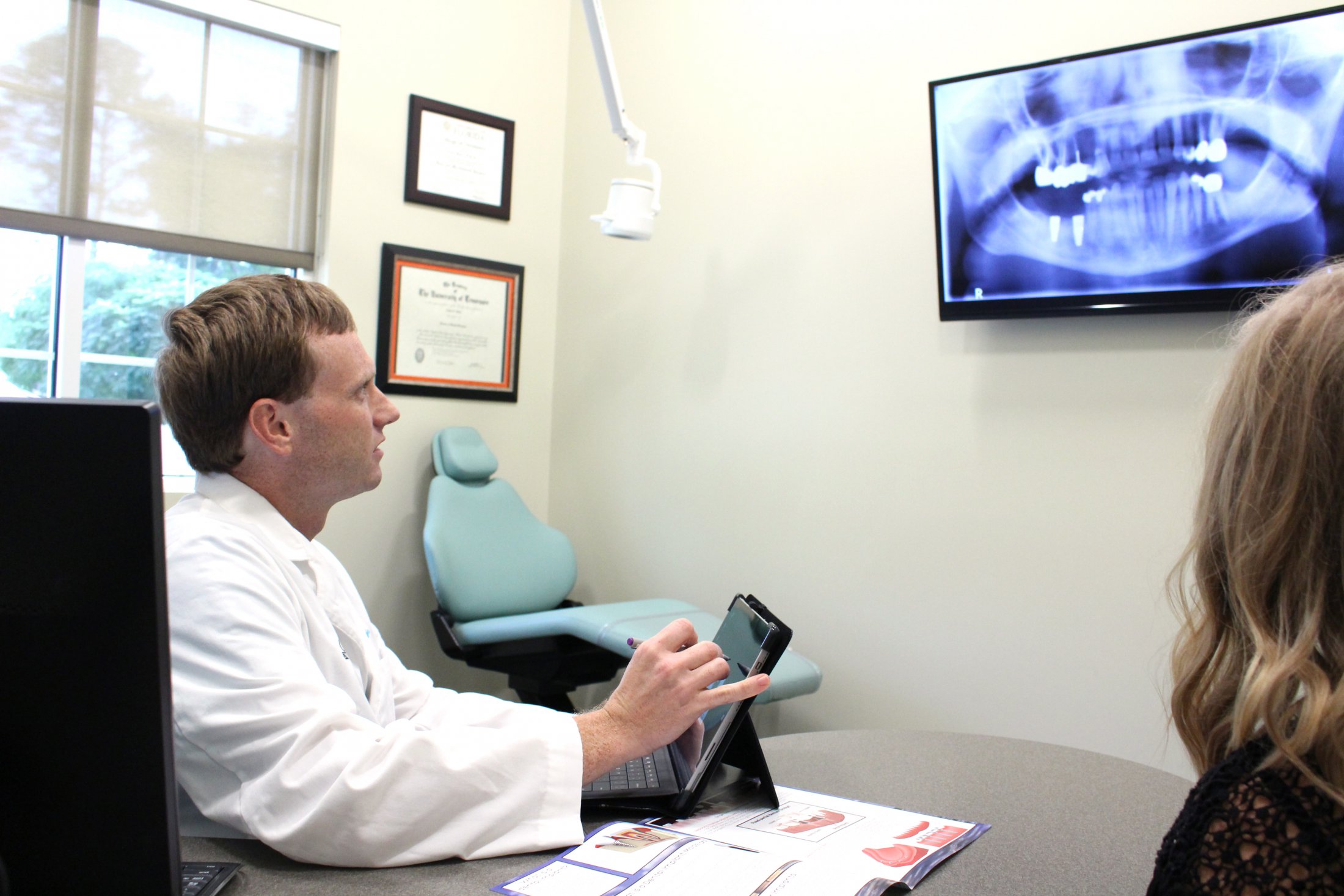
zR_9Dental Implants sound scary and if you’ve been advised that you need one, we want to make the process as simple and easy as possible and that starts with knowledge. Dr. Hairr here at Chapin Oral and Maxillofacial Surgery sat down and answered a few of our patient’s most pressing questions when it comes to Dental Implants and what to expect.
What leads to someone needing a dental implant?
Dr. Hairr: Someone missing a tooth may want to replace the tooth with something that feels as real as possible. There are other options like bridges and partial dentures for replacing teeth, but these do not feel nearly as real and are not as permanent. For people missing all of their teeth ( and wearing dentures), implants give people the ability to have restorations that are fixed to dental implants. A person in dentures can be given teeth that feel real and don’t move.
 
zR_36What kind of preparation goes into the implant process?
Dr. Hairr: Preparing for procedure is mainly based on what implant procedure is being done. A single tooth requires little, but a full mouth restoration involves a good deal of preparation. The main thing to mention about preparation is that 2 professionals must be involved – myself (an oral surgeon) and a dentist. I do the surgery and the general dentist places the actual teeth on the implants. This is a good thing – 2 experts working together to make sure the look, healing and health are in place.
 
What does the healing process and the aftermath looks like
Dr. Hairr: Typical implant healing is called “osseointegration”. Once the implant is placed, the bone creates a chemical bond to the implant as it heals. This takes several weeks to a few months (depending on bone quality). After this process is complete, the implant is completely fused to the bone and cannot be removed  (as least not easily). I tell patients that it is then like a “rock stuck in concrete”. The integration process does not hurt. Most of the post operative discomfort is over within a week. It is less discomfort than having a tooth removed.
 
If you’ve considered dental implants or have been told by a professional you’re a candidate for the procedure, Dr. Hairr and the team would love to sit down with you to discuss different options and walk through the process in more detail to make you feel as knowledgeable and comfortable as possible. Give us a call today to set up an appointment: (803) 816-2795

Our New Blog!

Our blog has recently been set up. Please check back soon!